Math Articles, tips & study guides
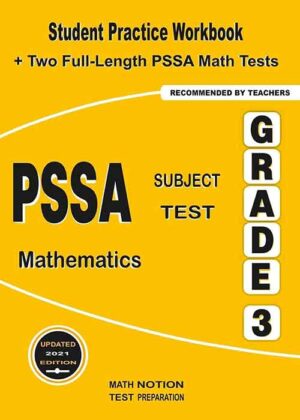 PSSA Subject Test Mathematics Grade 3: Student Practice Workbook + Two Full-Length PSSA Math Tests Paperback Original price was: $18.99.$12.99Current price is: $12.99.Download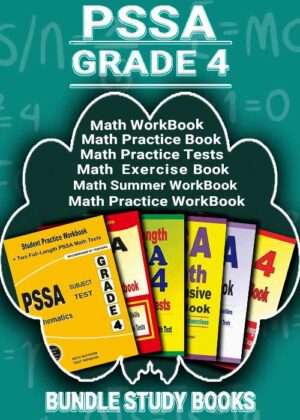
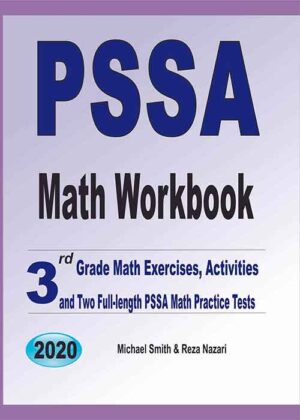 PSSA Math Workbook: 3rd Grade Math Exercises, Activities, and Two Full-Length PSSA Math Practice Tests Original price was: $18.99.$12.99Current price is: $12.99.Download
 6 PSSA Math Practice Tests Grade 4: Extra Practice to Achieve a Crack Score Original price was: $18.99.$12.99Current price is: $12.99.Download
 6 Full-length PSSA Grade 7 Math Practice Tests: Extra Test Prep to Help Ace the PSSA Grade 7 Math Test Original price was: $18.99.$12.99Current price is: $12.99.Download
 6 PSSA Math Practice Tests Grade 8: Extra Practice to Achieve a Crack Score Original price was: $18.99.$12.99Current price is: $12.99.Download
 PSSA Math Prep Grade 8: The Ultimate Step by Step Guide Plus Two Full-Length PSSA Practice Tests Original price was: $18.99.$12.99Current price is: $12.99.Download
 PSSA Grade 4 Math Comprehensive Exercise Book: Abundant Math Skill Building Exercises Original price was: $18.99.$12.99Current price is: $12.99.Download
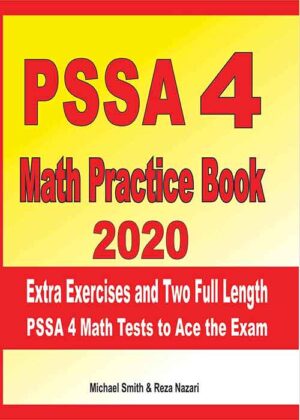 PSSA Grade 4 Math Practice Book 2020: Extra Exercises and Two Full Length PSSA Math Tests to Ace the Exam Original price was: $18.99.$12.99Current price is: $12.99.Download
 Pennsylvania Math: PSSA Grade 6 Guide (2026)
 Can You Use a Calculator on the PSSA Math Test?
 How the PSSA Math Test Works (Pennsylvania)
 How to Pass the Pennsylvania Math Test: 7 Strategies
 How to Prepare for State Standardized Math Tests
How to Prepare for the PSSA Math Test (Pennsylvania)

If your child attends a Pennsylvania public school, the PSSA is the yearly test that measures how well they’re mastering grade-level math, and for many parents it brings a familiar wave of worry. Learning how to prepare for the PSSA math test doesn’t have to be complicated, though. The Pennsylvania System of School Assessment tests the math your child is already learning in class, so the most effective preparation is steady, supportive practice aligned to the state’s standards. This guide explains what the PSSA is, how its math section works, how it’s scored, and exactly how you can help your child walk in feeling ready and calm.
The good news for families is that consistent PSSA math practice at home, even just a little each week, makes a real difference. Below we’ll cover the test format, the content by grade, common mistakes, a simple study routine, and the Pennsylvania-aligned workbook that keeps your child’s PSSA math prep on target.
What the PSSA is
PSSA stands for the Pennsylvania System of School Assessment, the state’s program for measuring student achievement against the Pennsylvania Core Standards. In math, students are tested in grades 3 through 8, with the assessments aligned to the state’s standards so they measure exactly what students are expected to learn at each grade level.
For parents, the key point is that the PSSA isn’t testing obscure material; it’s checking whether your child has learned the grade-level math their teacher has been covering all year. That means reinforcing the regular curriculum at home is genuinely the best preparation, and a Pennsylvania-aligned workbook makes that straightforward and stress-free.
How the PSSA math test works
The PSSA math test includes a mix of question types. Alongside traditional multiple-choice items, students encounter open-ended questions that ask them to show their work and explain their reasoning, not just give a final answer. This variety means recognition alone isn’t enough; your child needs to actually work problems out and communicate their thinking clearly.
Because the test is timed and spans multiple sections, it helps for your child to be comfortable both with the math and with the format. Practicing the kinds of questions they’ll see, especially the open-ended ones, removes a layer of unfamiliarity. Knowing what to expect ahead of time is one of the simplest ways to keep test-day nerves in check.
What’s on the PSSA math test by grade
The content follows the Pennsylvania Core Standards grade by grade. In the elementary grades, the focus is on number sense, multi-digit operations, fractions, and introductory measurement and data. By the upper-elementary and middle grades, students work with ratios and proportional reasoning, decimals and percentages, and the beginnings of algebra through expressions and equations.
In the middle grades, the math deepens into proportional relationships, rational numbers, expressions and equations, geometry such as area, surface area, and volume, and introductory statistics and probability. Because each grade builds on the one before, addressing gaps early keeps small struggles from compounding into bigger ones later in your child’s schooling.
How the PSSA is scored
PSSA results are reported in four performance levels: Below Basic, Basic, Proficient, and Advanced. Proficient is the benchmark that indicates a student is on grade level and meeting expectations, so it’s the level most families aim for, while Advanced reflects above-grade mastery.
It helps to read these levels as a snapshot rather than a final judgment. A child sitting just below Proficient usually has a few specific, fixable gaps rather than a broad weakness, and targeted practice in those areas is almost always more effective than anxious, across-the-board review. Knowing where your child stands tells you exactly where to focus.
How to help your child prepare
The single most effective thing you can do is build a short, consistent practice routine rather than waiting for testing season. Fifteen to twenty minutes a few times a week keeps skills fresh and prevents the slow forgetting that hurts scores. A Pennsylvania-aligned workbook makes this easy because the topics already match what the PSSA will assess.
Beyond practice, talk through math in everyday life, splitting a bill, doubling a recipe, comparing prices, so your child sees the skills as real and useful. Keep the tone encouraging; children who feel capable tackle hard problems instead of freezing. Steady PSSA math practice plus a calm, supportive attitude does more for scores than any amount of last-minute pressure.
Don’t overlook the open-ended questions
A distinctive feature of the PSSA is its open-ended questions, which ask students to show their work and explain their reasoning. These items reward clear, organized thinking, and they’re a place where unprepared students leave easy points on the table by writing too little or skipping them entirely.
Help your child practice showing their steps neatly and explaining how they reached an answer. Partial credit is available on these questions, so a student who writes out their reasoning, even if they don’t finish, often earns points a blank response wouldn’t. Practicing this skill with a workbook that includes open-ended-style problems pays off directly on test day.
Common mistakes to avoid
The most common preparation mistake is waiting until the last few weeks, then cramming. Math skills build through steady practice, so a child who has practiced all year is far better off than one scrambling in spring. A second mistake is using random worksheets that don’t match the Pennsylvania standards, which wastes effort on content the test may not even cover.
A third pitfall is ignoring the open-ended questions until test day. Children who’ve never practiced writing out their reasoning can lose points they could have earned. Using a workbook that mirrors the PSSA’s grade-level content and question styles addresses all of these issues at once.
A simple study routine
Here’s a routine that fits real family life. Pick three short sessions a week, fifteen to twenty minutes each, and rotate through your child’s grade-level topics so nothing goes stale. Spend a little extra time on the areas your child finds hardest, since targeted work on weak spots yields the biggest gains.
In the weeks before the test, mix in a few longer practice sets so your child builds stamina and comfort with a full session, including open-ended practice. Always review mistakes together rather than just marking them wrong, because understanding why an answer was off is what prevents the same error next time.
Helping an anxious child stay calm
Some children get nervous about testing no matter how prepared they are. The best antidote is familiarity: the more the question types and format feel routine, the less there is to fear. Remind your child that the PSSA is just a way for teachers to see what to work on next, not a judgment of how smart they are.
On test days, keep mornings unhurried, make sure your child is rested and fed, and send them off with encouragement rather than warnings. A child who feels supported and prepared will show their true ability far better than one who’s anxious, and the steady confidence that comes from consistent home practice is something you build gradually.
Why standards-aligned practice matters
It’s worth understanding why a Pennsylvania-specific workbook beats a generic math book or free printables. The PSSA tests the state’s particular standards in a particular sequence, and practice that matches that sequence ensures every minute your child spends is relevant. Generic worksheets often mix in content from the wrong grade or skip the exact skills Pennsylvania emphasizes, wasting effort.
When practice lines up precisely with what the PSSA measures, you also gain confidence that strong practice performance genuinely predicts a strong test result. There’s no guesswork about whether your child is studying the right things, which is why families and teachers across Pennsylvania rely on standards-matched workbooks.
Turning weak spots into strengths
One of the most useful habits you can build is treating every mistake as a clue. When your child misses a problem, don’t just note that it was wrong, figure out why. Was it a careless slip, a misread, or a genuine gap in understanding? Each calls for a different response, and sorting them out turns practice into a targeted improvement tool.
Keep a simple running list of the topics that keep tripping your child up, and devote a little extra practice time to those specifically. A child who repeatedly struggles with fractions needs focused work on fractions, not more of everything. This targeted approach steadily converts weak spots into areas of genuine confidence.
The Pennsylvania-aligned workbook that makes it easy
The simplest way to keep preparation aligned with the PSSA is a workbook written specifically for Pennsylvania standards and grade levels. For a sixth grader, the 6th Grade Pennsylvania Math for Beginners covers exactly the ratios, fractions, expressions, and geometry the PSSA will assess at that grade, with clear lessons and step-by-step answer explanations a parent can follow even if it’s been years since your own math classes.
Because it’s matched to the Pennsylvania standards, you’re never guessing whether the practice is relevant, every topic maps to what your child needs to know. It’s an instant download, so you can start a routine tonight, and Math Notion offers a matching book for each grade. Browse the full Pennsylvania math collection → to find your child’s grade.
Supporting good math habits at home
Beyond the worksheets, the habits you encourage shape your child’s long-term success with math. Teach them to read each question carefully, show their work rather than doing everything in their head, and check whether an answer makes sense before moving on. These simple habits prevent many of the careless errors that quietly lower scores on the PSSA, and they align perfectly with the open-ended items that reward clear, organized reasoning. Most of all, keep your encouragement steady and your expectations realistic, praising effort and progress rather than just correct answers, so your child learns that working through difficulty is what math is all about. Children who feel believed in keep trying, and trying is exactly what builds the grade-level skills the PSSA measures, year after year.
Frequently asked questions
What grades take the PSSA math test?
Students in grades 3 through 8 take PSSA math, aligned to the Pennsylvania Core Standards.
What is a passing PSSA score?
PSSA uses four levels: Below Basic, Basic, Proficient, and Advanced. Proficient indicates on-grade-level performance and is the benchmark most families aim for.
Are there open-ended questions on the PSSA?
Yes. Students must show their work and explain their reasoning on open-ended items, where partial credit is available, so practicing this skill is valuable.
How can I help my child prepare?
Build a short, consistent routine using a Pennsylvania-standards workbook for your child’s grade, practice the open-ended question style, and review mistakes together rather than cramming.
Math Notion makes standards-aligned math workbooks and test prep for learners at every level and across all 50 states. See the full collection.
Posted by Math Notion Team · Published on September 7, 2021

