Math Articles, tips & study guides
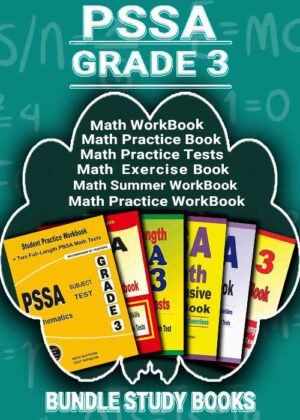
 PSSA Math Prep Grade 8: The Ultimate Step by Step Guide Plus Two Full-Length PSSA Practice Tests Original price was: $18.99.$12.99Current price is: $12.99.Download
 PSSA Grade 3 Summer Math Workbook: Essential Summer Learning Math Skills plus Two Complete PSSA Math Practice Tests Original price was: $18.99.$12.99Current price is: $12.99.Download
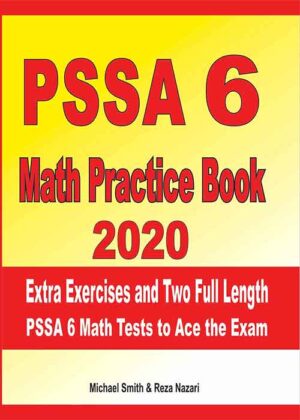 PSSA Grade 6 Math Practice Book 2020: Extra Exercises and Two Full Length PSSA Math Tests to Ace the Exam Original price was: $18.99.$12.99Current price is: $12.99.Download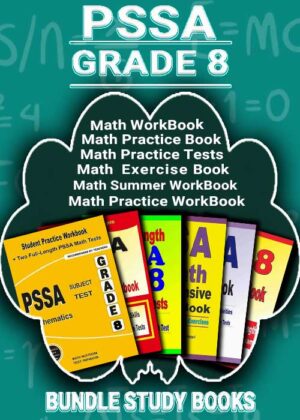
 PSSA Math Practice Grade 3: Complete Content Review Plus 2 Full-length PSSA Math Tests Original price was: $18.99.$12.99Current price is: $12.99.Download
 7th Grade PSSA Math Exercise Book: Review of Essential Skills and Concepts With 2 PSSA Math Practice Tests Original price was: $18.99.$12.99Current price is: $12.99.Download
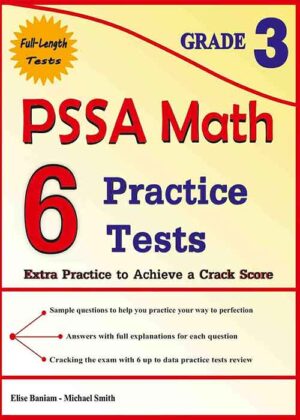 6 PSSA Math Practice Tests Grade 3: Extra Practice to Achieve a Crack Score Original price was: $18.99.$12.99Current price is: $12.99.Download
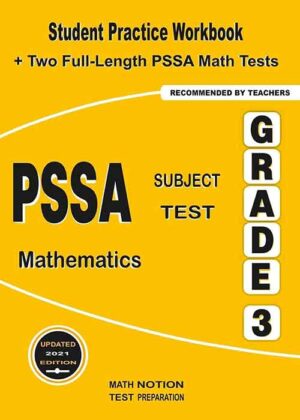 PSSA Subject Test Mathematics Grade 3: Student Practice Workbook + Two Full-Length PSSA Math Tests Paperback Original price was: $18.99.$12.99Current price is: $12.99.Download
 PSSA Math Practice Grade 6: Complete Content Review Plus 2 Full-length PSSA Math Tests Original price was: $18.99.$12.99Current price is: $12.99.Download
 Pennsylvania Math: PSSA Grade 6 Guide (2026)
 How the PSSA Math Test Works (Pennsylvania)
 How to Prepare for the PSSA Math Test (Pennsylvania)
 How to Pass the Pennsylvania Math Test: 7 Strategies
 How to Prepare for State Standardized Math Tests
Can You Use a Calculator on the PSSA Math Test?

One of the most common questions Pennsylvania parents ask before the PSSA is simple but important: can my child use a calculator? The answer affects how you prepare, because knowing when a calculator on the PSSA is allowed, and when it isn’t, tells you how much to emphasize by-hand computation. This guide explains the PSSA calculator policy clearly, why it matters, and how to prepare your child for both the calculator and non-calculator parts of the test, so there are no surprises on test day.
Understanding the calculator rules is part of smart PSSA math practice, because it shapes which skills your child most needs to build. Below we’ll cover the calculator policy by grade, why mental and by-hand math still matter, and how worksheets and a workbook prepare your child for the full PSSA math test.
The PSSA calculator policy by grade
The PSSA calculator policy depends on your child’s grade. In the lower elementary grades, calculators are generally not permitted, because the test is checking foundational number sense and computation that students are expected to do by hand. The goal at these grades is to confirm children can perform basic operations themselves.
In the upper-elementary and middle grades, the math test typically includes both a calculator section and a non-calculator section. This means older students will face some questions where a calculator is allowed and others where it isn’t, so they need to be ready for both. Because policies can be updated, it’s wise to confirm the current rules with your child’s school.
Why there are non-calculator sections
The non-calculator portions exist for a good reason: they verify that students have genuine number sense and can compute without relying on a device. Being able to work with fractions, decimals, and basic operations by hand reflects real understanding, and these skills underpin everything in higher math, so the test rightly checks them directly.
For parents, this means by-hand fluency isn’t optional, even in the grades where calculators are sometimes allowed. A child who can only compute with a calculator will struggle on the non-calculator section. Building strong mental and paper-and-pencil math is therefore essential preparation, regardless of the calculator rules.
What kind of calculator is allowed
Where calculators are permitted, the PSSA specifies what type is acceptable, and schools often provide an on-screen calculator within the online testing platform or allow a standard handheld model. Because the exact requirements can vary and change, the safest approach is to check with your child’s teacher or school about the current policy and the specific calculator allowed.
If an on-screen calculator is used, it’s helpful for your child to practice with a similar tool beforehand, so they’re comfortable navigating it on test day rather than fumbling. Familiarity with the allowed calculator is a small but real advantage, turning the tool into genuine help rather than a source of lost time.
Why mental math still matters
Even on calculator-allowed sections, strong mental math is a major advantage. Reaching for the calculator on every simple computation wastes time, and time management matters on any test. A student fluent in basic operations works faster and reserves the calculator for genuinely complex calculations, which is the efficient way to use it.
Mental math fluency also reduces errors. Students who can estimate and compute in their heads catch mistakes, like a calculator entry that gives an unreasonable answer, that others miss. So building mental math isn’t just for the non-calculator section; it makes your child faster and more accurate everywhere on the test.
Don’t let the calculator become a crutch
A common pitfall is letting a calculator replace understanding. A calculator can compute, but it can’t tell your child which operation to use, how to set up a problem, or whether an answer makes sense. Those judgments require genuine understanding, which is exactly what the test, and real math, demand.
So as your child practices, encourage them to understand each problem and set it up correctly, using the calculator only for the arithmetic once the thinking is done. Practicing this way, especially doing plenty of work without a calculator, ensures the device stays a helpful tool rather than a crutch that masks gaps in understanding.
How to prepare for both sections
The smartest preparation readies your child for both the calculator and non-calculator portions. Do plenty of practice without a calculator to build the by-hand fluency the non-calculator section requires, and, in the grades where calculators are allowed, also practice with the type your child will use so they’re comfortable with it.
This balanced approach covers all your bases. Your child develops the genuine computational skills the test checks directly, while also being ready to use a calculator efficiently where permitted. Matching your practice to the test’s actual structure, some with, some without, is exactly how to avoid surprises and perform well across the whole test.
Build by-hand fluency first
Because the non-calculator sections, and time efficiency overall, depend on by-hand skills, building computational fluency should be a priority. Make sure your child is comfortable with multiplication facts, fraction operations, decimals, and percentages without a calculator. These are the skills that shaky students most often lean on a calculator to avoid, which backfires on the non-calculator section.
Short, regular practice develops this fluency steadily. As by-hand computation becomes automatic, your child gains speed and accuracy everywhere on the test and is fully ready for the sections where no calculator is allowed. This foundational work is some of the highest-value PSSA preparation you can do.
Practice with grade-level worksheets
Targeted worksheets are perfect for building by-hand fluency and grade-level skills. Math Notion offers free, grade-level math worksheets you can match directly to your child’s grade: Grade 3, Grade 4, Grade 5, Grade 6, Grade 7, and Grade 8.
Browse the full library on our math worksheets page. Have your child work the problems by hand to build the computational fluency the non-calculator section requires, then review every problem together. This practice builds exactly the skills that the calculator can’t provide and the test directly measures.
What’s on the PSSA math test
Beyond the calculator question, it helps to know the content. The PSSA math test follows the Pennsylvania Core Standards by grade, covering number sense and operations, fractions and decimals, ratios and proportions, the beginnings of algebra, geometry, and data analysis, growing more advanced through the grades.
Whether a calculator is allowed or not, your child needs to understand these concepts and be able to apply them. The calculator only handles arithmetic; the reasoning, setup, and understanding are always up to the student. Solid preparation covers the full range of grade-level content, with and without a calculator as appropriate.
How the PSSA is scored
PSSA results are reported in four performance levels: Below Basic, Basic, Proficient, and Advanced. Proficient indicates on-grade-level performance and is the benchmark most families aim for, while Advanced reflects above-grade mastery. Strong performance on both calculator and non-calculator sections contributes to the overall score.
Because the non-calculator section directly tests by-hand skills, weakness there can pull down an otherwise strong score. This is one more reason to build computational fluency rather than relying on a calculator. A well-rounded preparation that covers both sections gives your child the best shot at reaching Proficient or above.
Pair worksheets with a complete workbook
Worksheets are perfect for building by-hand fluency, but a complete, grade-level workbook ties everything together with clear lessons and full coverage of Pennsylvania’s standards. For a sixth grader, the 6th Grade Pennsylvania math workbook covers exactly the ratios, fractions, expressions, and geometry the PSSA assesses, with step-by-step answer explanations a parent can follow.
Used together, free worksheets and a structured workbook give your child both focused practice and complete instruction for both calculator and non-calculator portions. The workbook is an instant download, so you can start tonight. Browse the full Pennsylvania math collection → to find your child’s grade.
Teaching smart calculator habits
Where a calculator is allowed, using it well is a skill worth teaching. Encourage your child to read the whole problem and decide on an approach before touching the calculator, then use it only for the actual computation. This prevents the common mistake of punching in numbers without a clear plan, which leads to errors and wasted time.
It’s also worth teaching your child to sanity-check calculator results. If a problem about the area of a small rectangle gives an enormous number, something went wrong in the entry. Students with good mental-math instincts catch these slips, while those who trust the calculator blindly don’t. Building both the habit of planning first and of checking results turns the calculator into a reliable ally rather than a source of careless mistakes.
The bottom line on the PSSA calculator
To sum up, whether your child can use a calculator on the PSSA depends on their grade, with lower grades generally calculator-free and upper grades offering both calculator and non-calculator sections. But the deeper point is that strong by-hand math skills matter regardless, because they’re directly tested, save time everywhere, and reflect the genuine understanding the whole test is built to measure.
So the best preparation isn’t about the calculator at all, it’s about building real computational fluency and conceptual understanding through steady practice, then learning to use a calculator efficiently where it’s allowed. Confirm your grade’s policy with the school, practice both with and without the device as appropriate, and your child will be ready for whatever the calculator on the PSSA rules turn out to be on test day.
Ultimately, a calculator is a tool, helpful where allowed but no substitute for understanding. Build your child’s by-hand fluency and conceptual grasp first, add comfortable familiarity with the permitted calculator second, and the calculator question stops being a worry and becomes just one more detail you’ve already prepared for.
Frequently asked questions
Can my child use a calculator on the PSSA math test?
It depends on the grade. Lower elementary grades generally don’t allow calculators, while upper-elementary and middle grades typically have both calculator and non-calculator sections. Confirm the current policy with your school.
Why does the PSSA have non-calculator sections?
To verify that students have genuine number sense and can compute by hand, foundational skills that underpin all higher math, rather than relying entirely on a device.
What kind of calculator is allowed?
Where permitted, the PSSA specifies acceptable types, often an on-screen calculator or a standard model. Check with your child’s school for the current requirements and practice with the allowed tool.
How should my child prepare?
Build strong by-hand fluency with grade-level worksheets for the non-calculator section, and, where calculators are allowed, also practice with the permitted type so it’s a help rather than a crutch.
Math Notion makes standards-aligned math workbooks and test prep for learners at every level and across all 50 states. See the full collection.
Posted by Math Notion Team · Published on August 10, 2024