Math Articles, tips & study guides
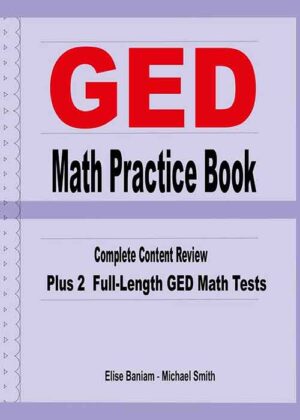 GED Math Practice Book: Complete Content Review Plus 2 Full-length GED Math Tests Original price was: $18.99.$12.99Current price is: $12.99.Download
 GED Math Practice Book 2020: Extra Exercises and Two Full Length GED Math Tests to Ace the Exam Original price was: $18.99.$12.99Current price is: $12.99.Download
 GED Math Exercise Book: Review of Essential Skills and Concepts with 2 GED Math Practice Tests Original price was: $18.99.$12.99Current price is: $12.99.Download
 6 Full-Length GED Math Practice Tests: Extra Test Prep to Help Ace the GED Math Test Original price was: $18.99.$12.99Current price is: $12.99.Download
 GED Math Comprehensive Exercise Book: Abundant Math Skill Building Exercises Original price was: $18.99.$12.99Current price is: $12.99.Download
 GED Subject Test Mathematics: Student Practice Workbook + Two Realistic GED Math Tests Original price was: $18.99.$12.99Current price is: $12.99.Download
 GED Math Workbook: Essential Learning Math Skills Plus Two Complete GED Math Practice Tests Original price was: $18.99.$12.99Current price is: $12.99.Download
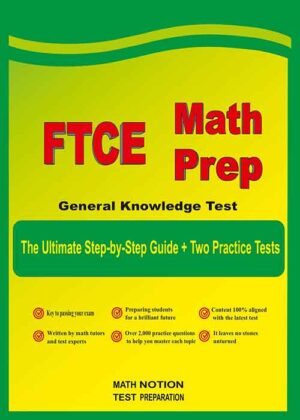 FTCE Math Prep (General Knowledge Test): The Ultimate Step by Step Guide Plus Two Full-Length FTCE Practice Tests Original price was: $18.99.$12.99Current price is: $12.99.Download
 IAR Quadratic Equations Practice — Illinois Guide
 CMAS Scatter Plots Practice — Colorado Guide
 NSCAS Sequences & Series Practice — Nebraska Guide
 How to Pass the RISE Math Test in Utah
 WFE Rounding and Estimation Practice — Wisconsin Guide
The Beginner’s Roadmap to NM MSSA Math Prep

📖 Reading time: 11 min
What if the biggest obstacle standing between your child and math success isn’t ability—but preparation? For thousands of New Mexico students each year, the NM MSSA math assessment determines whether they’re on track for grade-level proficiency. Yet many families don’t realize that targeted NM MSSA math prep can transform test anxiety into genuine confidence.
According to the National Center for Education Statistics (NCES), mathematics proficiency rates vary significantly across states, and New Mexico students face unique challenges in meeting grade-level benchmarks. The good news? Students who engage in structured, consistent math practice consistently outperform those who don’t—regardless of their starting point.
This guide walks you through everything you need to know about New Mexico math test preparation. You’ll learn exactly what the NM MSSA covers, which math skills matter most, and how to build a practice routine that actually works. Whether you’re a parent helping your sixth grader or a teacher preparing an entire classroom, this roadmap gives you the specific strategies that lead to real improvement.
Understanding the NM MSSA Math Assessment
What Is the NM MSSA and Why Does It Matter?
The NM MSSA (New Mexico Measures of Student Success and Achievement) is the state’s primary assessment for measuring student proficiency in mathematics and English language arts. This test aligns with New Mexico’s academic content standards and evaluates whether students have mastered the mathematical concepts expected at their grade level. For students, parents, and educators, understanding what this assessment measures is the first step toward effective preparation.
New Mexico administers the NM MSSA annually to students in grades 3 through 8, with each grade level tested on age-appropriate mathematical reasoning, number sense, and problem-solving skills. The assessment isn’t designed to trick students—it’s designed to measure whether they can apply mathematical concepts to solve real problems. That distinction matters because it shapes how you should approach NM MSSA math prep.
The New Mexico – NM MSSA Math Assessment resources provided by the state’s Public Education Department offer detailed information about test structure, scoring, and expectations. Reviewing these official resources helps families understand exactly what their students will encounter on test day.
Unlike classroom tests that might focus on a single chapter or unit, the NM MSSA evaluates cumulative knowledge across the entire school year. This means students need to retain and apply concepts from September through spring testing. That cumulative nature is precisely why ongoing practice—not last-minute cramming—produces the best results.
Test Format and What Students Experience
The NM MSSA math portion includes a variety of question types designed to assess different aspects of mathematical understanding. Students encounter multiple-choice questions, multi-select items where more than one answer may be correct, and constructed-response questions that require showing work and explaining reasoning. This variety means students must be comfortable not just finding answers, but demonstrating how they arrived at those answers.
Each grade level’s test focuses on the specific content standards for that year. For sixth graders, this includes ratios and proportional relationships, the number system (including operations with fractions and decimals), expressions and equations, geometry, and statistics and probability. The test measures both procedural fluency—can the student perform calculations correctly?—and conceptual understanding—does the student grasp why the math works?
Here are the key components that effective NM MSSA math prep must address:
- Number sense and operations: Students must demonstrate fluency with whole numbers, fractions, decimals, and integers. This includes understanding place value, performing multi-digit calculations, and recognizing relationships between different number forms. Sixth graders specifically need strong skills in dividing fractions and computing with multi-digit decimals.
- Algebraic thinking and expressions: Even at the elementary and middle school levels, the NM MSSA tests students’ ability to work with variables, write and evaluate expressions, and solve one-step equations. Building this algebraic foundation early prevents struggles in higher-level mathematics.
- Geometric reasoning: Questions assess understanding of shapes, area, volume, and coordinate planes. Students must apply formulas, visualize spatial relationships, and solve problems involving two- and three-dimensional figures.
- Data analysis and probability: The test includes questions about interpreting graphs, calculating measures of center (mean, median, mode), and understanding basic probability concepts. Students must read data displays accurately and draw reasonable conclusions.
Understanding these components helps you target your preparation efforts. Rather than trying to review everything at once, you can identify which areas need the most attention and allocate practice time accordingly.
Essential Math Skills for New Mexico Math Test Preparation
Building the Foundation: Number Sense and Operations
Strong number sense forms the foundation of all mathematical success, and it’s the single most important skill area for New Mexico math test preparation. Students who deeply understand how numbers work—how they relate to each other, how operations transform them, and why certain strategies work—consistently outperform students who have only memorized procedures without understanding.
For sixth-grade students preparing for the NM MSSA, number sense means much more than basic arithmetic. It means understanding that dividing by a fraction is equivalent to multiplying by its reciprocal, and knowing why that’s true. It means recognizing that 0.75, 3/4, and 75% all represent the same quantity in different forms. It means estimating whether an answer is reasonable before calculating the exact result.
One effective strategy for building number sense is daily mental math practice. Spend just five minutes each morning working through calculations without paper or calculator. Start with problems like 25 × 4, then progress to fraction operations like 1/2 + 3/4, and eventually tackle decimal division. This consistent practice builds the mathematical intuition that makes test questions feel manageable rather than overwhelming.
Another critical skill is understanding place value deeply enough to perform operations with multi-digit decimals. When students add 3.45 + 12.7, they must recognize that they’re adding hundredths to hundredths and tenths to tenths—and that 12.7 has zero hundredths. This conceptual clarity prevents the careless errors that cost points on standardized assessments.
Developing Problem-Solving Strategies
The NM MSSA doesn’t just test whether students can calculate—it tests whether students can solve problems. That distinction requires developing specific problem-solving strategies that students can apply when facing unfamiliar questions. Math mastery on standardized tests comes from having a reliable approach to any problem, not from having seen every possible problem type.
Effective problem solvers follow a consistent process: read the problem carefully, identify what’s being asked, determine which information is relevant, choose an appropriate strategy, execute the solution, and verify the answer makes sense. Teaching students to follow this process explicitly—and to slow down enough to actually use it—prevents the rushing that leads to preventable mistakes.
For students who want structured practice covering all the essential skills, 6th Grade New Mexico Math for Beginners provides step-by-step coverage of every tested concept. The workbook organizes content by skill area and includes the kind of scaffolded practice that builds both procedural fluency and problem-solving confidence—exactly what students need before test day.
Word problems deserve special attention in any NM MSSA math practice test preparation. Many students who can perform calculations accurately still struggle when those same calculations are embedded in real-world contexts. The key is teaching students to translate words into mathematical operations: “combined” often means addition, “each” often signals multiplication, and “remaining” typically indicates subtraction.
Consider this practice approach: take any calculation your student has mastered and write three different word problems that require it. For instance, if the skill is multiplying decimals, create word problems about purchasing multiple items at a given price, calculating distance traveled at a constant speed, or finding the area of a rectangular garden with decimal dimensions. This practice builds the translation skills the NM MSSA requires.
Fraction and Decimal Fluency
Fractions and decimals appear throughout the NM MSSA, and students’ comfort with these number forms often predicts their overall test performance. Sixth-grade standards emphasize dividing fractions by fractions, computing fluently with multi-digit decimals, and understanding the relationship between fractions, decimals, and percentages. Weakness in any of these areas creates barriers across multiple test questions.
Start fraction practice by ensuring students truly understand what fractions represent. A student who sees 3/4 as “three out of four equal parts” will handle fraction operations more successfully than one who sees it as just two numbers stacked vertically. Use visual models—fraction bars, number lines, area models—until the conceptual understanding is solid, then build procedural fluency on that foundation.
For decimal operations, emphasize the importance of place value alignment. When adding or subtracting decimals, line up the decimal points. When multiplying, count total decimal places in the factors and place the decimal accordingly in the product. When dividing, move the decimal in both divisor and dividend to create a whole-number divisor. These procedures must become automatic through repeated practice.
Proven NM MSSA Math Practice Strategies
Effective NM MSSA math prep requires more than just working through random practice problems. Students who approach their preparation strategically—with specific goals, consistent routines, and targeted review—see significantly better results than those who practice haphazardly. The following strategies have helped New Mexico students build genuine math confidence and achieve proficiency on the assessment.
- Establish a consistent daily practice routine. Math skills develop through regular, spaced practice rather than occasional marathon sessions. Set aside 20-30 minutes each day for focused math practice, ideally at the same time so it becomes habit. During this time, eliminate distractions and concentrate fully on the math. Consistency matters more than duration—six 20-minute sessions accomplish far more than one two-hour weekend cram. Over weeks and months, this daily investment compounds into substantial skill growth.
- Use diagnostic assessment to identify weak areas. Not all math topics deserve equal practice time. Start by identifying which skill areas need the most work through a diagnostic NM MSSA math practice test or skill assessment. Once you know that your student struggles with fraction division but excels at geometry, you can allocate practice time accordingly. This targeted approach is far more efficient than generic review that wastes time on already-mastered skills.
- Practice with test-format questions regularly. Familiarity with question formats reduces test anxiety and improves performance. The NM MSSA includes multiple-choice, multi-select, and constructed-response questions—and students should practice all three types. Pay special attention to constructed-response questions, which require students to show work and explain reasoning. Many students lose points not because they can’t solve problems, but because they don’t explain their thinking clearly enough.
- Review mistakes thoroughly rather than just moving on. Every error is a learning opportunity, but only if students take time to understand what went wrong. When your student misses a practice problem, don’t just show the correct answer. Ask questions: “What did you think the problem was asking? Where did your approach break down? What would you do differently next time?” This reflective practice builds mathematical reasoning skills that transfer across problem types.
- Build mathematical vocabulary actively. The NM MSSA uses precise mathematical language, and students who don’t understand terms like “expression,” “quotient,” “equivalent,” or “coordinate plane” will struggle regardless of their computational skills. Create a math vocabulary journal where students write definitions in their own words and include examples. Review these terms regularly—mathematical language must become automatic, not something students have to puzzle over during the test.
- Simulate test conditions periodically. While daily practice can be relaxed and exploratory, students also need experience working under test-like conditions. Once or twice per week, have students complete a timed practice section without assistance. This builds the stamina and time-management skills needed for the actual assessment. After each timed session, review results together and identify areas for continued practice.
- Connect math to real-world applications. Students who see mathematics as a useful tool rather than an abstract school subject bring more engagement to their practice. Look for opportunities to use math in daily life: calculating tips, measuring ingredients, comparing prices, estimating distances. These real-world applications reinforce the same skills the NM MSSA tests while demonstrating that math matters beyond the classroom.
Implementing these strategies requires patience and consistency, but the payoff is substantial. Students who follow a structured preparation plan don’t just perform better on the NM MSSA—they build mathematical confidence and skills that serve them throughout their academic careers. The goal isn’t just passing a test; it’s developing genuine mathematical competence.
Parents play a crucial role in this process even if they don’t feel confident in their own math abilities. You don’t need to be a math expert to enforce consistent practice time, to ask your student to explain their thinking, or to celebrate progress along the way. Your involvement signals that math matters and that you believe in your student’s ability to improve.
Additionally, consider forming or joining a study group with other families preparing for the NM MSSA. Students often learn effectively from peers, and study groups provide accountability that helps everyone stay on track. Parents can share resources and strategies while students work through practice problems together.
Worked Examples: NM MSSA-Style Problems
Seeing how to approach and solve problems step-by-step builds the problem-solving skills students need on test day. The following examples represent the types of questions New Mexico sixth graders encounter on the NM MSSA math assessment. Work through these with your student, emphasizing the thinking process at each step.
Example 1: Dividing Fractions
Problem: Maria has 3/4 of a gallon of paint. She needs 1/8 of a gallon to paint each small table. How many tables can Maria paint with the paint she has?
Step 1: Identify the operation needed. We need to find how many 1/8-gallon portions fit into 3/4 gallon. This is a division problem: 3/4 ÷ 1/8.
Step 2: Apply the rule for dividing fractions. To divide by a fraction, multiply by its reciprocal. The reciprocal of 1/8 is 8/1. So we calculate: 3/4 × 8/1.
Step 3: Multiply the fractions. Multiply numerators: 3 × 8 = 24. Multiply denominators: 4 × 1 = 4. This gives us 24/4.
Step 4: Simplify the result. 24 ÷ 4 = 6.
Answer: Maria can paint 6 tables with her paint. This makes sense because 1/8 is a small portion of a gallon, so we’d expect many portions to fit into 3/4 of a gallon.
Example 2: Evaluating Expressions with Variables
Problem: Evaluate the expression 4x + 7 when x = 5.
Step 1: Understand what “evaluate” means. We need to find the numerical value of the expression by substituting the given value for the variable.
Step 2: Substitute 5 for x. Replace x with 5 in the expression: 4(5) + 7.
Step 3: Follow order of operations. Multiplication comes before addition. Calculate 4 × 5 = 20 first.
Step 4: Complete the addition. 20 + 7 = 27.
Answer: When x = 5, the expression 4x + 7 equals 27. Students should note that 4x means 4 times x, and this multiplication is performed before adding 7.
Example 3: Finding Area of a Composite Figure
Problem: A swimming pool has an L-shaped deck around it. The longer section of the deck measures 12 feet by 4 feet. The shorter section measures 5 feet by 4 feet. What is the total area of the deck?
Step 1: Visualize the problem. We have two rectangles that together form an L-shape. We need to find the area of each rectangle and then add them together.
Step 2: Find the area of the longer section. Area = length × width = 12 × 4 = 48 square feet.
Step 3: Find the area of the shorter section. Area = length × width = 5 × 4 = 20 square feet.
Step 4: Add the areas together. Total area = 48 + 20 = 68 square feet.
Answer: The total area of the deck is 68 square feet. This problem demonstrates how to break composite figures into simpler shapes—a strategy that appears frequently on the NM MSSA.
Example 4: Calculating Mean (Average)
Problem: During five basketball games, Jordan scored 14, 18, 12, 22, and 14 points. What was Jordan’s mean score for these games?
Step 1: Recall the formula for mean. Mean = sum of all values ÷ number of values.
Step 2: Find the sum of all scores. 14 + 18 + 12 + 22 + 14 = 80 total points.
Step 3: Count the number of values. There are 5 games (5 values).
Step 4: Divide to find the mean. 80 ÷ 5 = 16.
Answer: Jordan’s mean score was 16 points per game. The mean represents the “average” performance—if Jordan scored the same number in every game, 16 points would give the same total.
Frequently Asked Questions
When do New Mexico students take the NM MSSA math test?
New Mexico students take the NM MSSA math assessment during the spring testing window, typically between March and May. The exact dates vary by district, so families should check with their local school for the specific testing schedule. Starting NM MSSA math prep at least two to three months before the testing window gives students adequate time to review all content areas and build confidence through consistent practice.
What score do students need to pass the NM MSSA math section?
The NM MSSA uses performance levels rather than a simple pass/fail designation. Students receive scores categorized as Below Proficient, Approaching Proficient, Proficient, or Advanced. The goal for most students and schools is reaching the Proficient level, which indicates grade-level mastery of mathematical concepts and skills. Specific score ranges for each performance level are set by the New Mexico Public Education Department and may be adjusted periodically.
How can parents help with New Mexico math test preparation at home?
Parents can support NM MSSA math prep by establishing consistent practice routines, providing a quiet study space, and showing interest in their student’s mathematical learning. You don’t need to be a math expert—asking your child to explain how they solved a problem builds their understanding even if you’re learning alongside them. Using a structured New Mexico NM MSSA study guide or workbook ensures comprehensive coverage of all tested topics and takes the guesswork out of what to practice.
📚 More from Math Notion
🎯 Recommended Math Book
6th Grade New Mexico Math for Beginners — $14.99
Category: Others
New Mexico Math
NM MSSA Success
Perfect for classroom learning, homeschooling, or extra practice at home.
Key Takeaways
- The NM MSSA math assessment tests cumulative knowledge across number sense, algebraic thinking, geometry, and data analysis—targeted preparation across all these areas produces the best results.
- Daily practice of 20-30 minutes builds mathematical skills more effectively than occasional longer sessions; consistency creates lasting improvement.
- Understanding fraction and decimal operations deeply is essential for sixth-grade success, as these skills appear throughout the assessment in various problem types.
- Structured resources like 6th Grade New Mexico Math for Beginners provide comprehensive, organized practice that covers every tested concept.
Effective NM MSSA math prep transforms test anxiety into confidence by building genuine mathematical understanding. Students who commit to consistent practice, focus on their weak areas, and approach problems strategically don’t just perform better on the assessment—they develop math skills that serve them for years to come. The preparation journey matters as much as the test day result.
Ready to give your student the comprehensive preparation they need? Explore the full collection of New Mexico math resources at mathnotion.com/tests and find the workbooks, practice tests, and study guides that match your student’s grade level and goals.
NM-MSSA math practice workbooks for New Mexico
The fastest way to turn this guide into results is steady practice. Our New Mexico math workbooks are built for NM-MSSA test prep, with full-length New Mexico MSSA math practice, worksheets, and step-by-step answer explanations — ideal for homeschool, classroom, or after-school NM-MSSA math workbook.
- 6th Grade New Mexico Math Practice Workbook
- 7th Grade New Mexico Math Practice Workbook
- 8th Grade New Mexico Math Practice Workbook
Browse all Math Notion math practice books →
Official source: For the latest test details and dates, visit the New Mexico Public Education Department NM-MSSA resources.
Posted by Math Notion Team · Published on April 28, 2026