A Friendly, Standards-Aligned Guide to Building Math Confidence

Introduction: Why 6th Grade Math Matters in Rhode Island
Sixth grade is a critical turning point in a student’s math journey—especially in Rhode Island.
This is the year when math shifts from basic arithmetic to deeper concepts like ratios,
fractions, integers, expressions, and early algebraic thinking.
For many students, this transition can feel overwhelming. New terminology, word problems,
and multi-step reasoning can quickly lead to confusion if the foundation isn’t strong.
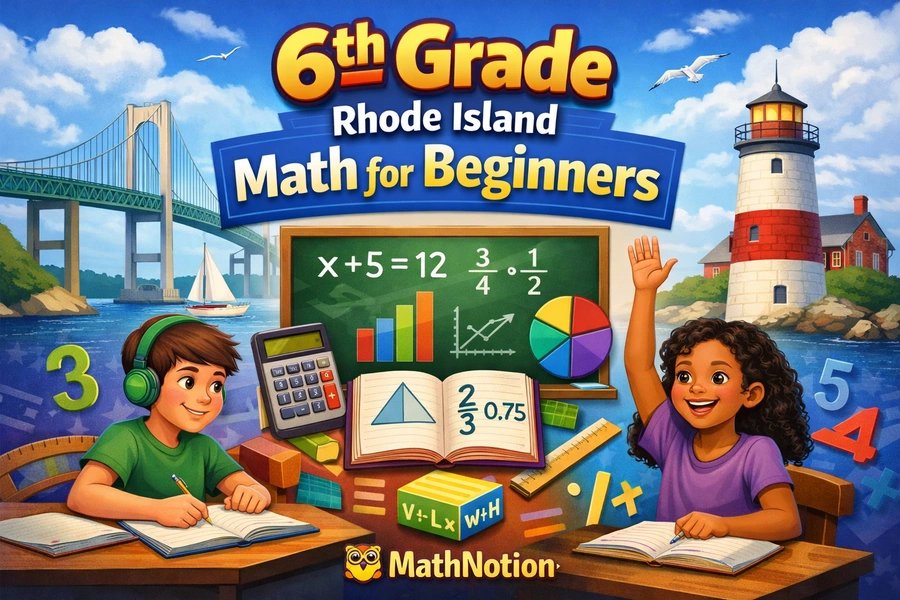
That’s exactly why a 6th Grade Rhode Island Math for Beginners approach is so important.
This guide is designed for parents, teachers, tutors, and students who want a clear,
beginner-friendly path to success.
—
Understanding Rhode Island 6th Grade Math Standards
Rhode Island follows the Common Core State Standards (CCSS) for mathematics.
These standards emphasize conceptual understanding, reasoning, and real-world application.
In sixth grade, students are expected to:
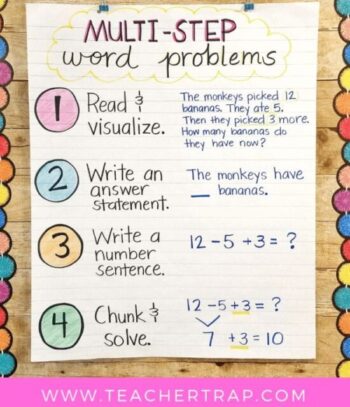
- Explain why a solution works
- Apply math to real-world situations
- Use models, diagrams, and equations to show reasoning
Key Focus Areas in Rhode Island 6th Grade Math
—
1. Ratios and Rates
Students learn how to compare quantities and understand relationships such as miles per hour,
cost per item, and unit rates.
Example: If 3 notebooks cost $6, how much does one notebook cost?
This topic builds the foundation for percentages and proportional reasoning used in later grades.
—
2. Fractions and Decimals
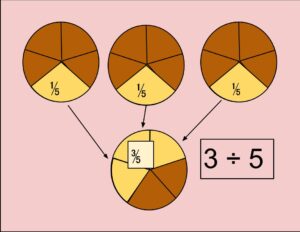
In 6th grade, students are expected to divide fractions, convert fractions to decimals,
and solve real-world fraction word problems.
A beginner-friendly approach uses visual models, step-by-step reasoning,
and plenty of guided practice.
—
3. Integers and the Number Line
This is often the first time students work with negative numbers.
They learn about positive and negative values, absolute value,
and ordering integers on a number line.
Real-life examples—such as temperature, elevation, and money—help make this concept clear.
—
4. Expressions and Equations (Pre-Algebra)
Students are introduced to variables, algebraic expressions, and one-step equations.
Example: x + 5 = 12
For beginners, the key is understanding that a variable represents an unknown number,
not something to fear.
—
5. Geometry: Area, Surface Area, and Volume
Students learn how to calculate the area of polygons, surface area of prisms,
and volume of rectangular solids.
Hands-on examples—like boxes, rooms, and containers—help students visualize these concepts.
—
6. Statistics and Data Analysis
Students work with data sets and learn about mean, median, range, and box plots.
This topic strengthens critical thinking and decision-making skills.
—
Why Beginners Need a Different Approach
Not all students enter sixth grade with the same background.
Some missed key concepts in earlier grades or feel anxious about math.
A Rhode Island Math for Beginners approach focuses on clarity, visuals,
scaffolded practice, and confidence-building.
—
How Parents Can Support 6th Grade Math at Home
- Ask how your child found an answer
- Encourage drawing models or number lines
- Use real-life math in daily activities
- Practice regularly with standards-aligned resources
—
Teaching Tips for Educators and Tutors
- Use simple language before formal terms
- Connect math to real-world contexts
- Review foundational skills often
- Create a safe space for mistakes
—
Choosing the Right Math Resources for Rhode Island
Look for resources that are:
- Aligned with Rhode Island / Common Core standards
- Beginner-friendly with step-by-step explanations
- Rich in visuals and word problems
—
Final Thoughts: Building a Strong Math Foundation
Sixth grade math in Rhode Island does not have to be stressful.
With the right beginner-focused approach, students can gain confidence,
understand concepts deeply, and prepare for future success.
Math is a skill—not a talent. It grows with practice and understanding.