Math Articles, tips & study guides
 SBAC Grade 7 Summer Math Workbook: Essential Summer Learning Math Skills plus Two Complete SBAC Math Practice Tests Original price was: $18.99.$12.99Current price is: $12.99.Download
 6 Full-Length SBAC Grade 8 Math Practice Tests: Extra Test Prep to Help Ace the SBAC Grade 8 Math Test Original price was: $18.99.$12.99Current price is: $12.99.Download
 SBAC Math Practice Grade 7: Complete Content Review Plus 2 Full-length SBAC Math Tests Original price was: $18.99.$12.99Current price is: $12.99.Download
 SBAC Grade 4 Math Comprehensive Exercise Book: Abundant Math Skill Building Exercises Original price was: $18.99.$12.99Current price is: $12.99.Download
 SBAC Grade 3 Summer Math Workbook: Essential Summer Learning Math Skills plus Two Complete SBAC Math Practice Tests Original price was: $18.99.$12.99Current price is: $12.99.Download
 6 SBAC Math Practice Tests Grade 6: Extra Practice to Achieve a Crack Score Original price was: $18.99.$12.99Current price is: $12.99.Download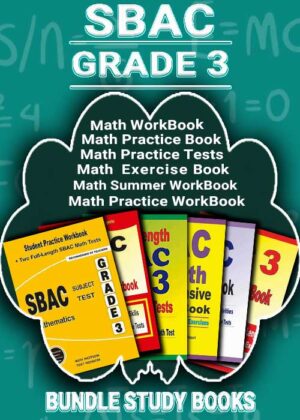
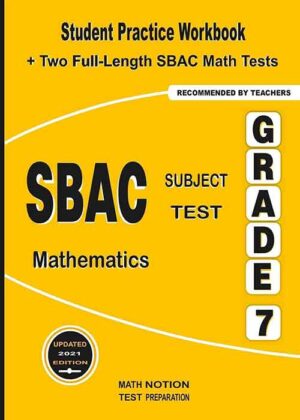 SBAC Subject Test Mathematics Grade 7: Student Practice Workbook + Two Full-Length SBAC Math Test Original price was: $18.99.$12.99Current price is: $12.99.Download
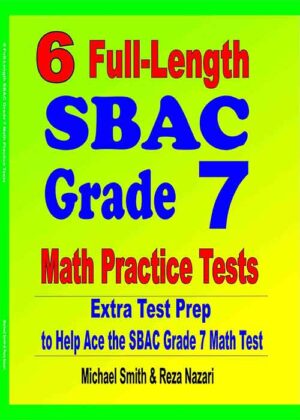 6 Full-length SBAC Grade 7 Math Practice Tests: Extra Test Prep to Help Ace the SBAC Grade 7 Math Test Original price was: $18.99.$12.99Current price is: $12.99.Download
 Nevada SBAC Math Test Anxiety: A Step-by-Step Plan
 7 SBAC Math Prep Habits for Nevada Students
 SBAC Scores Explained: Levels, Ranges, and the Highest Score
 CMAS Scatter Plots Practice — Colorado Guide
 OST Pre-Calculus Practice — Ohio Guide
SBAC Congruence and Similarity Practice — California Guide

📖 Reading time: 11 min
Quick answer: To master SBAC congruence and similarity practice for California, focus on understanding the definitions, applying transformation rules for congruence, setting up proportional ratios for similarity, and working through structured math problems that mirror the exact format of the Smarter Balanced Assessment.
Who this is for: California students in grades 4–12 preparing for the SBAC math test, parents helping their child review geometry concepts at home, and teachers looking for clear strategies and examples to reinforce congruence and similarity in the classroom.
Congruence and similarity are two of the most tested geometry concepts on the SBAC math exam — and they’re also two of the most misunderstood. Many students can recognize that two triangles “look the same,” but when the test asks them to prove it, set up a proportion, or identify a transformation sequence, they freeze. That gap between recognizing and reasoning is exactly where test scores fall apart.
The good news is that these topics are completely learnable with the right approach. Once you understand what congruence and similarity actually mean at a mathematical level, you’ll see patterns everywhere — in angle relationships, side ratios, coordinate geometry, and real-world problem solving. This post walks you through everything: the foundational concepts, the most common student mistakes, step-by-step strategies, worked examples, memory tricks, and specific advice for parents and teachers supporting learners at home and in class.
Whether you’re a seventh grader approaching these ideas for the first time or an eighth grader reviewing before test day, the strategies here will help you approach California SBAC congruence and similarity problems with confidence and clarity.
Why California SBAC Congruence and Similarity Skills Are Foundational for Math Success
The Role These Concepts Play in the California Math Standards
Congruence and similarity aren’t just isolated geometry topics — they are the backbone of mathematical reasoning across multiple grade levels and subject areas. Mastering these concepts means you understand how shapes relate to each other, how proportional thinking works, and how transformations connect algebra to geometry. In California’s math curriculum, these ideas appear first in the upper elementary grades and deepen significantly through middle school, where they become central to the California – SBAC Math Assessment expectations for grades 6 through 8.
The Smarter Balanced Assessment Consortium (SBAC) test that California students take is built around deep conceptual understanding — not just memorized formulas. That means students need to know not only that two figures are congruent, but also why they are congruent and how to use that relationship to solve problems. A student who truly understands congruence can prove that two triangles are identical using rigid transformations — translations, rotations, and reflections. A student who truly understands similarity can write and solve a proportion to find a missing side length in a scale drawing or real-world scenario.
Beyond the test itself, these skills build directly into high school geometry, algebra II, trigonometry, and even calculus. Similar triangles are used to derive the slope formula. Congruence is used in proof-writing. Scale factors connect to exponential thinking. Every student who skips a deep understanding of congruence and similarity will eventually feel that gap later — usually at the worst possible moment, like during a final exam or a college placement test.
Where Congruence and Similarity Appear Across Grade Levels
California’s math standards introduce these topics progressively, and the SBAC tests them at increasing depth as students advance:
- Grades 4–5: Students begin recognizing congruent shapes visually and understanding that matching shapes have equal sides and angles. They also start comparing figures using basic geometric vocabulary.
- Grades 6–7: Proportional reasoning becomes central. Students apply scale factors, work with ratios of corresponding sides in similar figures, and solve for missing measurements. Similar triangles appear in ratio-and-proportion problems.
- Grade 8: The SBAC math test places heavy emphasis on transformations. Students must understand that congruence is defined by rigid motions (translations, rotations, reflections) and that similarity extends to dilations. They write and justify proofs informally and formally.
- High School: Students formalize triangle congruence postulates (SSS, SAS, ASA, AAS, HL), apply similarity in right triangle trigonometry, and use these ideas in coordinate geometry proofs.
Understanding this progression is essential for targeted studying. If you’re an eighth grader, for example, you shouldn’t just review the definitions — you should be practicing transformation sequences and justifying congruence through rigid motions, because that’s exactly what the California SBAC math test will ask you to do.
Why These Topics Show Up So Frequently on Standardized Math Tests
Test designers love congruence and similarity because they simultaneously assess multiple mathematical skills at once: spatial reasoning, proportional thinking, equation solving, and logical justification. A single SBAC problem might ask a student to identify a transformation, determine whether two triangles are similar, write a proportion, and solve for a missing side — all in one item. That’s exactly why dedicated SBAC congruence and similarity practice is so important. You can’t just know the vocabulary; you need to be able to execute a multi-step solution under timed conditions.
Common Mistakes Students Make with California SBAC Congruence and Similarity
The Errors That Cost Students Points on Test Day
Most students who struggle with congruence and similarity problems aren’t struggling because the math is too hard — they’re struggling because of a small number of recurring misunderstandings. Identifying these mistakes before your exam is one of the highest-value things you can do during your California math prep.
Mistake 1: Confusing congruence with similarity. This is the single most common error. Students use the words interchangeably, but they mean very different things. Congruent figures are exactly the same — same shape, same size, same angle measures, same side lengths. Similar figures have the same shape but are not necessarily the same size. The angles are equal, but the sides are proportional, not identical. On the SBAC, using the wrong term in a written response or selecting the wrong relationship in a multiple-choice item will cost you the point.
Mistake 2: Setting up proportions incorrectly. When working with similar figures, you have to match corresponding sides — that means the sides that are in the same position relative to the same angle. A very common error is matching a short side of one triangle to a long side of another because they “look like they go together” visually. Always label corresponding vertices first, then set up your proportion systematically.
Mistake 3: Forgetting that transformations preserve congruence, not just appearance. Students sometimes say two figures are congruent simply because they look the same. On the SBAC grade 8 test, you’ll often need to describe the specific transformation — or sequence of transformations — that maps one figure onto the other. “They look the same” is not an acceptable justification.
Mistake 4: Misidentifying corresponding parts. In the triangle similarity statement △ABC ~ △DEF, the order of the vertices tells you everything. Angle A corresponds to angle D, angle B corresponds to angle E, and angle C corresponds to angle F. Side AB corresponds to side DE, side BC corresponds to side EF, and side AC corresponds to side DF. Students who ignore vertex order when working through California math standards congruence and similarity problems will set up incorrect proportions and get wrong answers every time.
Mistake 5: Applying the wrong postulate or theorem. In high school geometry, students need to know which congruence postulate applies (SSS, SAS, ASA, AAS, or HL) and which similarity theorems apply (AA, SSS~, SAS~). Trying to use SSS when you only have two sides and an angle, for example, won’t work — and the SBAC will test whether you know the difference.
Recognizing these five errors in your own work is an important step. The next step is building the habits that prevent them. For students who want a structured plan to address exactly these kinds of mistakes, the 7 SBAC Math Prep Habits for Nevada Students walks through systematic test preparation habits — including how to self-check your work on geometry problems — that apply directly to California SBAC math prep as well. As the U.S. Department of Education emphasizes, structured, evidence-based practice is one of the most reliable ways to improve student math performance at every grade level.
How to Catch Your Own Mistakes During Practice
Self-checking is a skill that many students never develop because they assume that getting an answer is the same as getting the right answer. After solving any congruence or similarity problem, ask yourself these three questions: Did I correctly identify which sides or angles correspond? Did I set up my proportion so that corresponding parts are in the same position in the ratio? Did I verify my answer makes sense — for example, is the larger triangle’s side actually larger than the smaller triangle’s side?
These quick checks take about twenty seconds but will catch the majority of careless errors before they become lost points on test day.
📚 More from Math Notion
🎯 Recommended Math Book
7 SBAC Math Prep Habits for Nevada Students
Boost your Nevada SBAC math prep with 7 proven habits, worked examples, and expert tips to help grade-level students score higher on test day.
Step-by-Step Strategies for SBAC Math Congruence and Similarity Practice
The most effective approach to SBAC congruence and similarity practice is systematic — not random. Working through math problems without a clear method leads to inconsistent results. The following step-by-step strategies will help you solve these problems correctly and efficiently on test day.
- Start by identifying what type of problem you’re looking at.
Before you write a single number, read the problem carefully and ask: Is this asking about congruence (same size and shape) or similarity (same shape, proportional size)? Is it asking you to prove a relationship, identify a transformation, find a missing measurement, or write a proportion? Knowing the problem type tells you which tools to reach for. Students who skip this step often apply the wrong method entirely and waste valuable time during the test. - Label all given information directly on the figure.
Most SBAC math problems involving congruence and similarity include a diagram. Mark every given angle measure, side length, tick mark, and arc symbol on the figure itself. This visual organization helps you see relationships that aren’t obvious from the text alone. If a problem says angle B = 47° and side AB = 6 cm, write those values next to the corresponding parts on the diagram before doing anything else. - Identify corresponding parts systematically before setting up any equation.
Use the vertex labeling — △ABC ≅ △DEF or △RST ~ △XYZ — to match every angle and every side. Write out the correspondence explicitly: A↔X, B↔Y, C↔Z. Then list the corresponding sides: AB↔XY, BC↔YZ, AC↔XZ. This takes thirty seconds and eliminates the most common proportion-setup error. Don’t rely on visual intuition for this step — always use the vertex order stated in the problem. - For similarity problems, write the proportion before solving.
Once you’ve identified corresponding sides, write your proportion as a fraction equation: AB/XY = BC/YZ = AC/XZ. Substitute the known values, isolate the variable using cross-multiplication, and solve. Always check that your answer is reasonable — if the larger triangle has a known side of 12 and the smaller triangle has a corresponding side of 4, your scale factor is 3, and every other pair of sides should reflect that same ratio. - For congruence problems, name the transformation sequence explicitly.
On the California SBAC grade 8 test, you’ll often need to describe how to map one figure onto a congruent figure using rigid motions. Practice naming the transformation type (translation, rotation, reflection) and the specific details: the direction and distance of a translation, the center and degree of a rotation, or the line of a reflection. Saying “reflect over the y-axis, then translate 3 units up” is a complete, justifiable answer. Saying “flip and move” is not. - Apply memory shortcuts for congruence postulates and similarity theorems.
The congruence postulates — SSS, SAS, ASA, AAS, and HL — each require specific combinations of information. Create a quick reference card and practice identifying which postulate applies before you look at the answer choices. For similarity, remember that AA (Angle-Angle) is the most commonly tested theorem and the easiest to apply — if two angles of one triangle are equal to two angles of another, the triangles are similar. - Use free math worksheets and step-by-step math resources to build fluency before test day.
Fluency comes from repetition with feedback. Working through free math worksheets focused specifically on congruence and similarity — covering transformation problems, proportion setup, and postulate identification — trains your brain to recognize problem types quickly. Aim for consistent daily practice in the weeks leading up to your SBAC test. Twenty focused math problems per day beats a single long cramming session every time.
These strategies work together as a system. The first three build your problem setup habits. Steps four and five give you the execution tools for the two main problem types. Steps six and seven keep your recall sharp and your practice consistent. When you combine all seven into a regular routine, you’ll notice that SBAC congruence and similarity math problems start to feel predictable rather than intimidating.
Beyond solving individual problems, it’s worth practicing under timed conditions. The SBAC math test is designed to be completed within a set window, and students who haven’t practiced pacing often run out of time on the later, more complex items. Try setting a timer for two minutes per problem during your practice sessions. If you can’t finish a problem in that window, mark it, move on, and return to it at the end. That pacing habit alone can recover several points on test day.
Finally, pay attention to the question stem. The SBAC often uses precise mathematical language — words like “justify,” “explain,” “determine,” and “prove” signal what kind of response is expected. A question that asks you to “justify” your answer needs more than a number — it needs a sentence or two of mathematical reasoning. Practicing this kind of written mathematical explanation during your SBAC math prep will serve you well on the performance tasks that appear on the Smarter Balanced Assessment.
Worked Examples: Congruence and Similarity on the SBAC
Example 1: Determining Similarity and Finding a Missing Side Length
Problem: Triangle ABC has angles measuring 55°, 75°, and 50°. Triangle DEF has angles measuring 55°, 75°, and 50°. Side AB = 8 cm and the corresponding side DE = 12 cm. Side BC = 10 cm. Find the length of side EF.
Step 1: Determine whether the triangles are similar. Both triangles have the same three angle measures: 55°, 75°, and 50°. By the Angle-Angle (AA) Similarity Theorem, two triangles are similar if two pairs of corresponding angles are congruent. Since all three angles match, △ABC ~ △DEF.
Step 2: Identify corresponding sides. Since △ABC ~ △DEF in that vertex order, AB corresponds to DE, BC corresponds to EF, and AC corresponds to DF.
Step 3: Set up the proportion using corresponding sides.
AB / DE = BC / EF
8 / 12 = 10 / EF
Step 4: Solve using cross-multiplication.
8 × EF = 12 × 10
8 × EF = 120
EF = 120 ÷ 8 = 15
Answer: Side EF = 15 cm. This makes sense because DE is larger than AB by a scale factor of 12/8 = 1.5, so EF should be 1.5 times BC: 10 × 1.5 = 15. ✓
Example 2: Identifying a Transformation Sequence to Prove Congruence
Problem: On a coordinate grid, Triangle PQR has vertices at P(1, 2), Q(4, 2), and R(4, 6). Triangle P’Q’R’ has vertices at P'(−4, −2), Q'(−1, −2), and R'(−1, 2). Describe the transformation sequence that maps △PQR onto △P’Q’R’ and explain why the triangles are congruent.
Step 1: Compare corresponding vertices. P(1, 2) → P'(−4, −2). Q(4, 2) → Q'(−1, −2). R(4, 6) → R'(−1, 2).
Step 2: Look for a pattern. Each x-coordinate changes: 1 → −4 (change of −5), 4 → −1 (change of −5). Each y-coordinate changes: 2 → −2 (change of −4), 6 → 2 (change of −4). Every vertex shifts exactly −5 in the x-direction and −4 in the y-direction.
Step 3: Name the transformation.
This is a translation of 5 units to the left and 4 units down: (x, y) → (x − 5, y − 4).
Step 4: Justify congruence. Translations are rigid motions — they preserve the size and shape of a figure. Because △PQR maps exactly onto △P’Q’R’ through a single translation, the triangles are congruent: △PQR ≅ △P’Q’R’.
Answer: Translate △PQR left 5 units and down 4 units. Since translations preserve all side lengths and angle measures, △PQR ≅ △P’Q’R’. ✓
Example 3: Applying Scale Factor in a Real-World Similarity Problem
Problem: A school is using a scale drawing to plan a new garden. In the drawing, a rectangular garden measures 4 inches by 6 inches. The scale is 1 inch = 5 feet. What are the actual dimensions of the garden, and what is its actual area?
Step 1: Apply the scale factor to find real dimensions.
Length: 6 inches × 5 feet/inch = 30 feet
Width: 4 inches × 5 feet/inch = 20 feet
Step 2: Calculate the actual area.
Area = length × width = 30 × 20 = 600 square feet
Step 3: Verify using the scale factor relationship. The drawing and the real garden are similar rectangles with a linear scale factor of 5. Area scales by the square of the linear scale factor: 5² = 25. Drawing area = 4 × 6 = 24 square inches. Real area = 24 × 25 = 600 square feet. ✓
Answer: The actual garden is 30 feet × 20 feet, with an area of 600 square feet. This example also highlights a critical concept — when working with similarity, linear measurements scale by the scale factor, but area scales by the square of the scale factor. Many students forget that relationship, and the SBAC tests it directly.
Memory Tricks and Shortcuts for Congruence and Similarity
Geometry vocabulary is easier to retain when you attach it to a mental image or a memorable phrase. Here are several shortcuts that consistently help students during SBAC math prep:
- “Same Size, Same Shape” vs. “Same Shape, Scale Change”: Say these aloud. Congruent = same size, same shape. Similar = same shape, scale change. Repeat this pair until it becomes automatic.
- CPCTC — Corresponding Parts of Congruent Triangles are Congruent: Once you establish that two triangles are congruent, every corresponding part is automatically congruent. This shortcut saves many proof steps.
- AA is All You Need for Similarity: You only need two pairs of equal angles to prove similarity — the third pair is always forced by the Triangle Angle Sum Theorem (all angles must add to 180°). So AA is the fastest path to proving △ABC ~ △DEF.
- Scale Factor Card: Write the scale factor as a fraction with the new figure on top: new/old. Use this fraction consistently throughout every step of a similarity problem to avoid mixing up which triangle is larger.
- Vertex Order Is the Map: The similarity or congruence statement is a map. △ABC ~ △RST means A→R, B→S, C→T. Always read vertex labels as the correspondence map before doing anything else.
- Rigid Motions Preserve, Dilations Scale: Translations, rotations, and reflections are rigid — they preserve size and create congruent figures. Dilations change size — they create similar figures. One sentence, two rules.
How Congruence and Similarity Appear on Other Standardized Math Tests
These concepts appear well beyond the California SBAC. Understanding them pays dividends across a wide range of assessments:
- SAT Math: The SAT tests similar triangles frequently, especially in problems involving parallel lines cut by a transversal, where AA similarity applies directly. Proportional reasoning with scale factors also appears in SAT data and measurement problems.
- ACT Math: The ACT includes congruence postulates in its plane geometry section, along with scale drawings and similar polygon problems that require setting up and solving proportions.
- GED Mathematical Reasoning: The GED tests congruence at a basic level — identifying congruent figures, matching angles, and applying the idea that rigid motions preserve shape and size. Similarity appears in ratio and proportion problems.
- State Tests (STAAR, MCAS, FAST, LEAP): Every major state assessment includes these topics at the middle school level, making SBAC congruence and similarity practice transferable preparation for any student who may move between states or take multiple assessments.
- College Placement Tests (Accuplacer, TSI, ALEKS): Students entering college algebra or geometry courses are tested on proportional reasoning and basic congruence — skills that begin with the similarity concepts covered here.
Practice Strategies for Parents and Teachers Supporting SBAC Math Prep
Parents and teachers play a critical role in helping students build the practice habits that lead to geometry success. You don’t need to be a math expert to support a learner — you need to provide structure, consistency, and encouragement.
For parents at home: The most powerful thing you can do is create a consistent, distraction-free practice environment. Set aside 20 to 30 minutes per day — not once a week before the test — for math homework help and review. Use free math worksheets focused on congruence and similarity to give your child extra practice beyond what they receive in school. When reviewing completed math practice problems together, don’t just check whether the answer is right — ask your child to explain their reasoning aloud. That verbal explanation reveals gaps that a correct answer sometimes hides.
For teachers in the classroom: Introduce congruence through physical manipulation before moving to abstract reasoning. Have students use patty paper or tracing paper to perform reflections and rotations, then connect those physical experiences to the formal transformation language the SBAC expects. For similarity, start with scale drawings of real objects — classrooms, maps, or blueprints — before moving to abstract triangle problems. Real-world contexts activate proportional reasoning more naturally than abstract problems alone.
For both parents and teachers: Math practice problems that mirror the SBAC format — including multi-part items, technology-enhanced response types, and written justification tasks — are far more valuable than generic geometry exercises. The SBAC uses specific task types that students need to practice in advance. Look for SBAC math practice problems labeled by grade level and Smarter Balanced claim, and use those to guide your review sessions. The California – SBAC Math Assessment page includes released test questions and practice resources you can access directly.
When to Seek a Math Tutor or Extra Help
Some students reach a point where home practice and classroom support aren’t closing the gap fast enough. That’s normal, and it’s not a reason for discouragement — it’s a signal that more targeted, one-on-one instruction is needed. Consider seeking a math tutor or additional math help if your student consistently struggles with proportion setup after multiple practice sessions, cannot identify corresponding parts even with prompting, or shows significant test anxiety that interferes with their performance on timed math practice tests.
A good math tutor will focus on the specific misconceptions — not just assign more problems. Look for someone who understands the California math standards and has experience with SBAC math prep specifically. Many students need only four to six focused tutoring sessions on congruence and similarity to resolve the core confusion and regain confidence. Online tutoring platforms and school-based math support programs are excellent starting points for families who need math homework help quickly.
Frequently Asked Questions
What is the difference between congruence and similarity in math?
Congruent figures are identical in both shape and size, while similar figures have the same shape but different sizes connected by a scale factor. In SBAC congruence and similarity practice, this distinction matters enormously — congruent triangles have equal side lengths and equal angle measures, while similar triangles have equal angle measures but proportional (not equal) side lengths. Mixing up the two terms is one of the most common — and most costly — errors on the California SBAC math test.
How do I find a missing side in a similar figure on the SBAC?
To find a missing side in a similar figure, first establish which sides correspond using the vertex labeling in the similarity statement. Then set up a proportion with corresponding sides: side₁ / side₂ = side₃ / x. Cross-multiply and solve for x. Always verify your answer by checking that the ratio of every pair of corresponding sides equals the same scale factor. This step-by-step math approach works on the SBAC, SAT, ACT, and all state math assessments.
What transformations prove that two figures are congruent on the SBAC grade 8 test?
On the SBAC grade 8 math test, two figures are congruent if one can be mapped onto the other using one or more rigid motions — specifically, translations (slides), rotations (turns), and reflections (flips). These transformations preserve both side lengths and angle measures, which is the mathematical definition of congruence. Dilations, by contrast, produce similar figures, not congruent ones, because a dilation changes the size of the figure while preserving its shape.
Key Takeaways
- Congruent figures are identical in size and shape; similar figures share the same shape with proportional sides — knowing this distinction is the foundation of all SBAC congruence and similarity practice.
- The most common student mistakes — confusing congruence with similarity, mismatching corresponding parts, and setting up incorrect proportions — are entirely preventable with deliberate, structured practice habits.
- Use the step-by-step approach: identify the problem type, label the figure, match corresponding parts by vertex order, write the proportion before solving, and justify your answer with a transformation or postulate.
- For structured California SBAC math prep that reinforces these geometry skills with proven habits and worked examples, explore the resources at Math Notion’s Math Test Prep Books collection.
Mastering California SBAC congruence and similarity practice is not about memorizing a list of facts — it’s about building a clear mental framework for how shapes relate to each other through size, proportion, and transformation. Every student who puts in focused, consistent practice with these concepts builds skills that extend far beyond a single test. The geometry you master here will support your algebra, your trigonometry, your college placement tests, and your everyday mathematical reasoning for years to come.
Start with the strategies in this guide, work through the practice examples, and use official California SBAC resources alongside quality math prep materials. If you’re ready to take your preparation further, visit mathnotion.com/math-practice/ to explore math prep books designed specifically for students working toward higher scores on state math assessments.
SBAC math practice workbooks for California
The fastest way to turn this guide into results is steady practice. Our California math workbooks are built for SBAC test prep, with full-length California SBAC math practice, worksheets, and step-by-step answer explanations — ideal for homeschool, classroom, or after-school SBAC math test prep.
- 6th Grade California Math Practice Workbook
- 7th Grade California Math Practice Workbook
- 8th Grade California Math Practice Workbook
Browse all Math Notion math practice books →
Official source: For the latest test details and dates, visit the Smarter Balanced assessment consortium.
Posted by Math Notion Team · Published on May 15, 2026